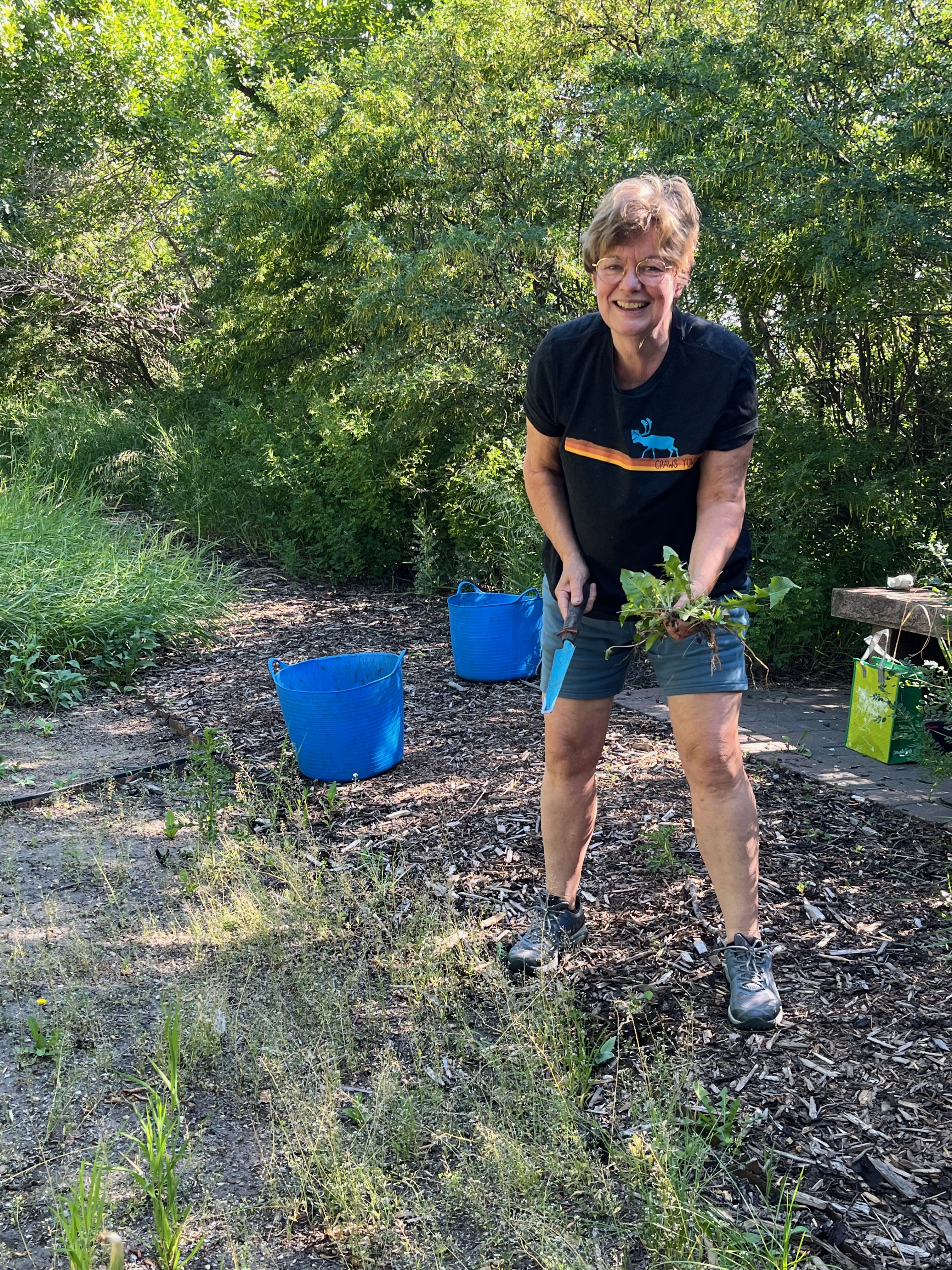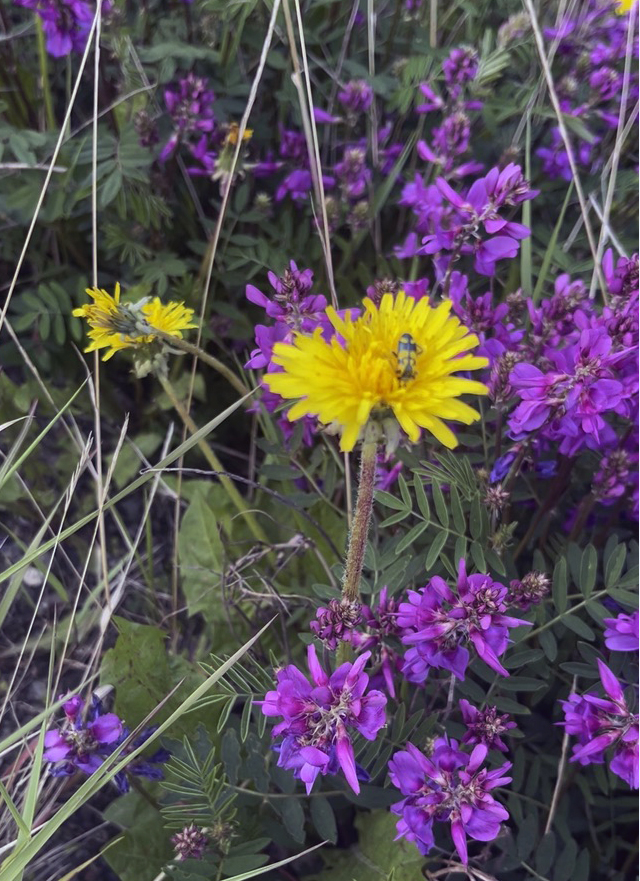
In my new collections project, I explore how the Common Dandelion (Taraxacum officinale) – an introduced species and non-human settler from Euro-Asia – is both a proxy and a marker of human settler dispersal in the land now known as Canada.
Even a very small child will recognize a Dandelion and joyfully blow its puffball into the air. The popular nature platform iNaturalist shows 8,700 participants list over 21,000 observations of the plant across Canada. Yet does this plant — both maligned and cultivated — actually belong here? And may this settler plant present itself as a symbol of human settlers’ complex and layered relationship to the land itself?
I’m working with a European woodcut dated 1597. (I have been working with the early plant images that appear in herbals, among the very first printed books in Europe.) Other materials I’m using include municipal maps, Google maps, herbarium samples (i.e. dried Dandelions preserved by scientists) and data, iNaturalist data, field notes and photos. I may use Dandelion flowers, leaves and roots to make sustainable ink. Most of the art work produced will be works on paper using printmaking techniques.
My project intends to build a national, visual language of this settler plant. I’ve already worked in the far North and on the Prairies. Next, I plan to work in locations on the West and East coasts, and in southern Canada at Point Pelee, ON. I am exploring how this seemingly insignificant flower may tell us something, perhaps quite a lot, about being settlers in Canada, about habitat destruction, cultural assumptions and the impact of capitalist values on land ownership..
Our cultural relationship to Dandelions is complex: they are sold as veggies in supermarkets; yet Canadians spread lawn chemicals to kill them. Botanist categorize Dandelions as aliens, non-natives, noxious weeds, invasive or naturalized. There are also many folk names for Dandelions indicating their cultural significance. I use the term “settler” plant.
In contemporary culture, the Dandelion is often seen as a symbol of resilience and strength. Recent examples are the Canada Reads 2025 book titled Dandelion (Liew, 2022) and the international eco-campaign Project Dandelion https://www.projectdandelion.com. In the novel Wild Dark Shore, (McConaghy, 2025) a character identifies Dandelions “as the greatest traveler among them [plants].” Indeed, voyageurs, surveyors and early pioneers who travelled in Canada are romanticized, praised for their courage, strength, and resilience. But, unlike native flora and fauna, Dandelions and human settlers alike mostly find a home in disturbed soil, built environments, and along well-travelled paths.

I plan to provide updates on this project here and on Instagram @nandyheule.
The Dandelion’s pallid Tube/Astonishes the Grass – And Winter instantly becomes/An Infinite Alas – The Tube uplifts a signal Bud/And then a shouting Flower – The proclamation of the Suns/That sepulture is o’er. – Emily Dickinson, American poet, 1881